GENERAL EDUCATION COURSES
Political theory and law; English; Fundamentals of Informatics; Supportive skills; Physical Education; National Defense Education
FOUNDATION KNOWLEDGE IN THE MAJOR
Fundamentals of Vietnamese Culture; Overview of Tourism; Sustainable Tourism; Tourism Culture; Basic Marketing; Management Principles; Tourist Psychology; Tourism Law; International Tourism Payment; Tourism Geography and Territorial Organization.
SPECIALIZED KNOWLEDGE
Compulsory subjects: Tourism English, Tourism Marketing, Tour Design and Operation, Travel Management, Tour Guiding, Famous Sites and the Museum System of Vietnam, Animation, Presentation and Tourism Activity Organization, Applied Informatics in Tourism.
Elective subjects: Tourist Safety and Health, Vietnamese History.
ENTERPRISE SEMESTER
Students undertake professional internships for 2–4 months at enterprises, working as actual employees.
They also take practical skills examinations in their specialized field.
GRADUATION THESIS OR MAJOR-SPECIFIC PROJECT
Graduation project
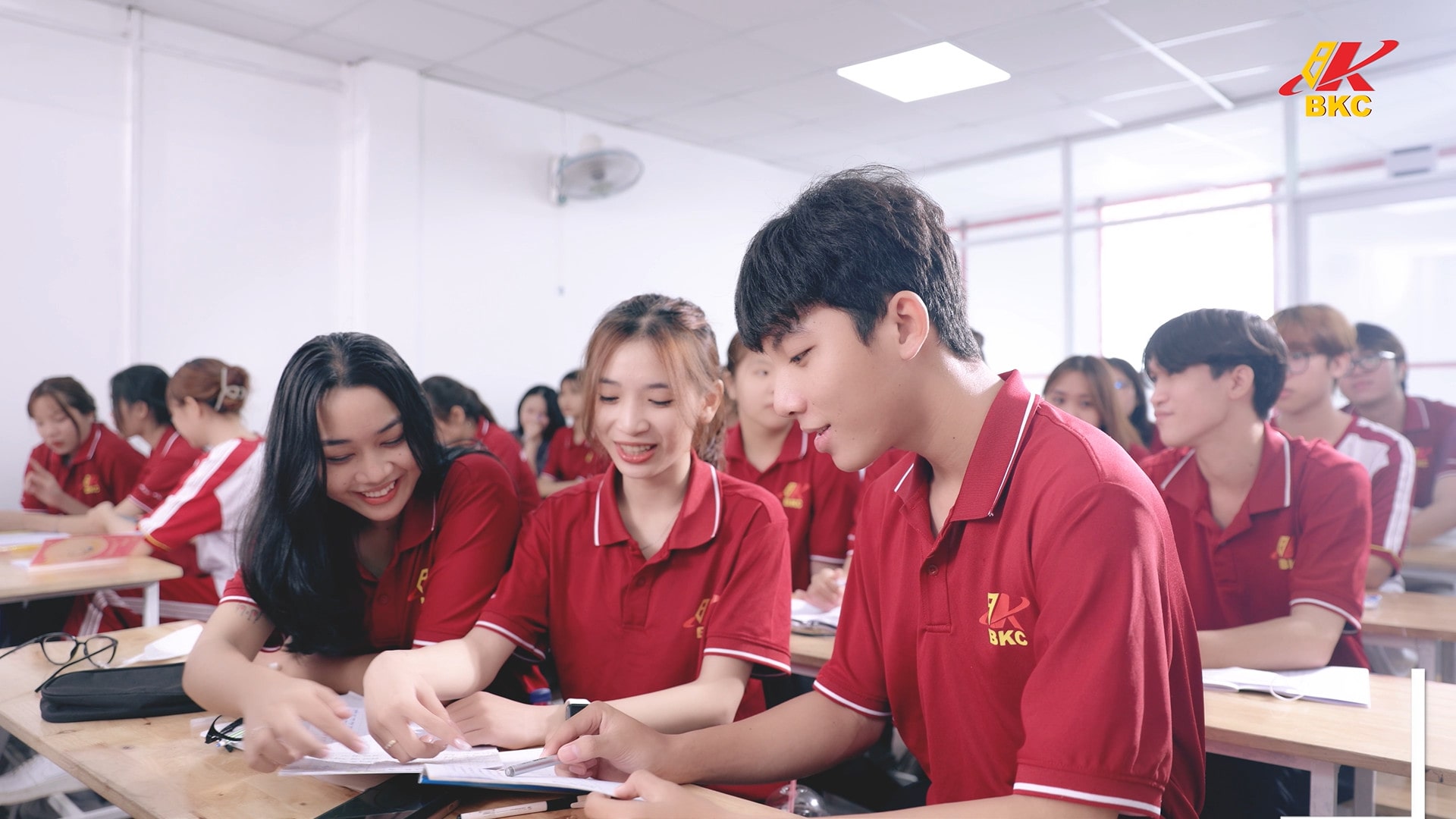
Student completes enrollment procedures (Enrollment application file; Tuition fees; Uniform; Student is issued a student code; Student ID card).
Participates in Orientation Day (Students meet the faculty heads and initially familiarize themselves with the college environment; Students are guided on how to log into the student information portal; Instructions on how to view the class schedule, exam schedule, session times, and classrooms…).
Students study general education courses.
Emphasis is placed on training students’ soft skills (Communication skills; Presentation skills; Negotiation skills; Teamwork skills; Creative thinking skills; Questioning skills…).
Month of physical fitness and national defense training in a professional environment.
Field trip to observe business models.
Career orientation opportunities.
Students are equipped with fundamental industry knowledge.
Students are equipped with specialized major knowledge.
Students are trained in English, including both communicative English and specialized English (English for Specific Purposes).
Students are trained in soft skills (Communication skills, Presentation skills; Creative thinking skills; Negotiation skills; Creative thinking skills; …).
Students participate in field trips to observe business models.
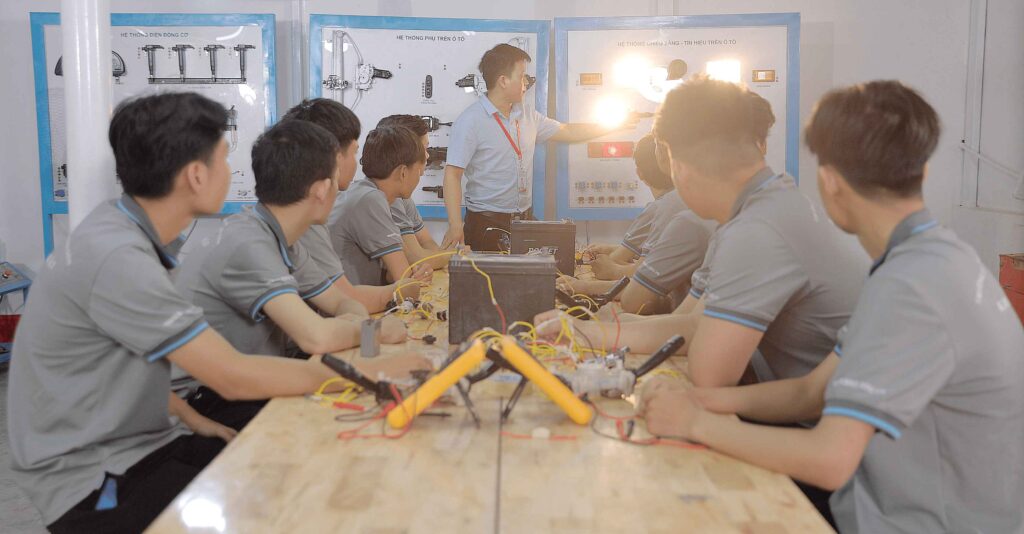
Students are allowed to participate in observation internships (kientap) and practice in dedicated practice classrooms/labs.
For certain vocational/professional subjects, students will study and practice at enterprises affiliated with the school.
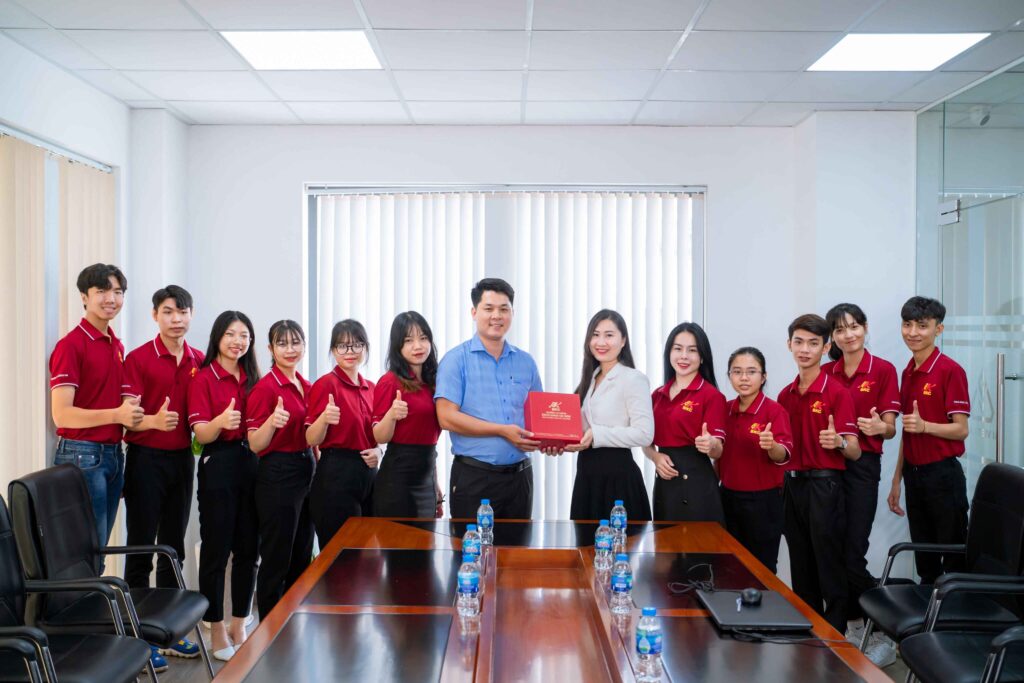
Students are trained in in-depth industry knowledge across more than 20 majors offered at Saigon Polytechnic College (Cao đẳng Bách Khoa Sài Gòn).
Studies are concentrated in classes according to the major, specialization, and field of study.
Students are trained in English, which includes: Communicative English, specialized English (English for Specific Purposes), and B1 output standard according to the European Framework.
Students are trained in office IT skills and meet the required IT output standard.
Participate in school activities to enhance soft skills before starting a future career.
Work directly on real-world projects of enterprises, learning and gaining practical professional experience.
Arrangements are made for internships at enterprises affiliated with the school.
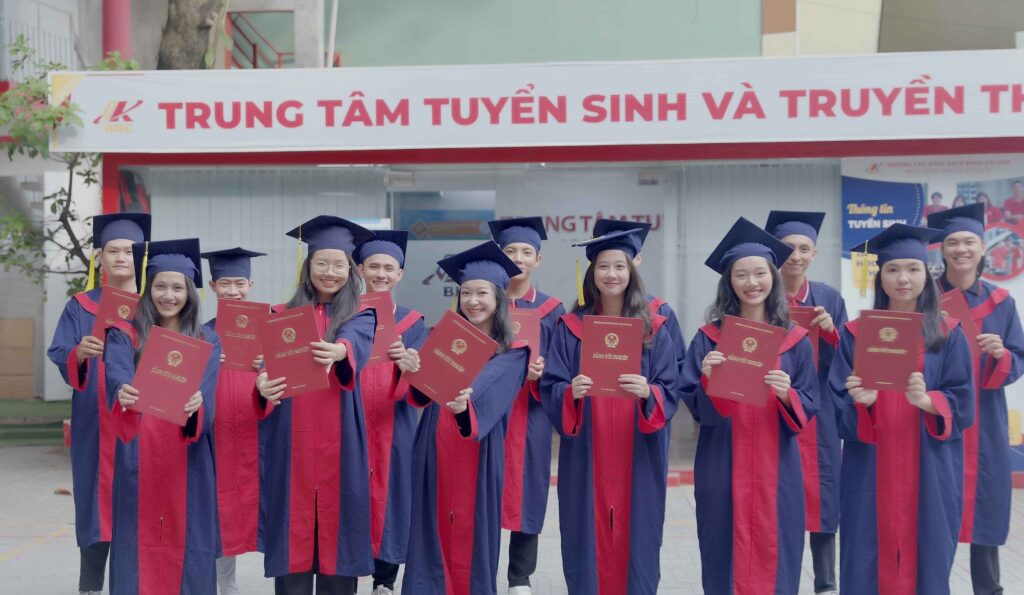
Students receive in-depth industry knowledge training for their major across more than 20 training programs at Saigon Polytechnic College (Cao đẳng Bách Khoa Sài Gòn).
Students primarily study in concentrated classes according to their major.
Students are trained in English to meet the B1 output standard according to the European Framework.
Students are trained in IT skills to meet the required output standard.
Students are trained in skills such as: Work attitude; Guidance on interviewing and job application skills; Communication skills, and Negotiation skills.
Students are trained in CV writing skills.
Students take standardized English and IT certification exams to meet the output requirements.
Participate in the Enterprise Semester.
Students complete and defend their graduation project (thesis).
BKC accepts applications based on high school academic records and transcripts from vocational colleges, colleges, and universities; No entrance examination required.
Bach Khoa Saigon College (BKC) is a reliable and reputable training institution for enterprises. Every year, thousands of students have trusted and chosen BKC due to its outstanding advantages and learning benefits:
Advantages
Cost-saving in education: The school assists students in applying for study loans with the lowest costs as stipulated by the Government.
Professional skills (training program is 30% theory, 70% practice) and soft skills (acquired through Youth Union and Student Association activities).
Benefits
Ability to choose a major that suits personal interest and passion from over 31 trades/professions currently being trained at the school.
Air-conditioned classrooms and campus-wide Wi-Fi.
Dormitory available for students from distant areas.
Support for arranging enterprise internships for students.
Issuance of a formal College Diploma (Cao đẳng chính quy), recognized nationwide.
Support for students in securing employment after graduation.
Opportunity to articulate (Liên thông) to a University program right at the school.
Opportunities to enroll in international partnership programs and receive scholarships to study abroad in Singapore, Australia, Taiwan, etc.
What is it like to study Tourism and Travel Management at BKC?”
“BKC commits to employment support depending on the nature of each major. Bach Khoa Saigon College will introduce internship locations and assist students in finding employment. The companies introduced by the school are official cooperation partners of the College, so students can be completely assured of the compensation and reputation of these organizations.
The training roadmap and duration for the college program at BKC for secondary school graduates is 8 semesters (4 years).”
The duration for articulation from college to university is 1.5 years. Thus, for secondary school graduates, the entire academic pathway from college through to completion of the university articulation program will take 5.5 years.